
Capacity Utilization | Advanced Scheduling
Automatically assigns tables for self‑scheduled reservations while ensuring optimal use of available capacity
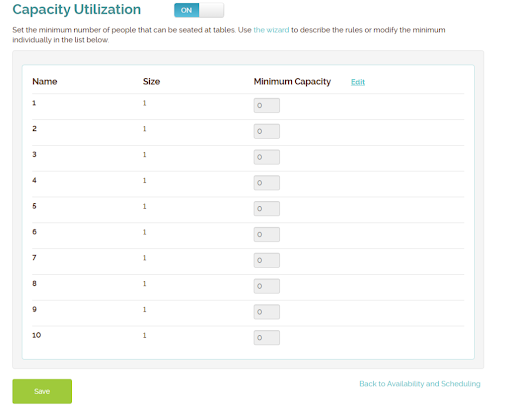
Capacity Utilization automatically assigns tables for self‑scheduled reservations while ensuring optimal use of available capacity, preventing double bookings, and reducing manual intervention by hosts and managers.
By applying minimum capacity rules per table, the system avoids inefficient seating—such as small parties occupying large tables, while still allowing customers to check availability and request reservations online.
Goals
- Automatically assigns the best table for online reservations
- Ensures efficient use of tables while preventing double bookings
- Adapts to different party sizes with flexible seating rules
- Reduces manual work and decision-making for hosts and managers
Rule: Capacity Utilization
Sets a minimum party size for each table so only suitable tables are shown and assigned, preventing inefficient seating and reducing manual intervention. Each rule can be independently enabled or disabled based on business needs.
Feature Access
Path: Settings → Add Yourself → Availability & Scheduling → Advanced Scheduling Rules → Capacity Utilization
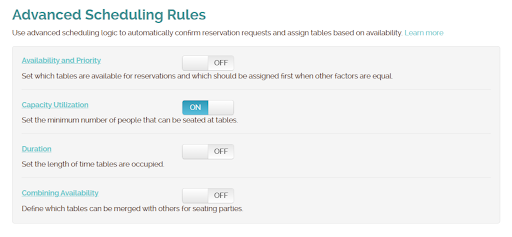
How Advanced Scheduling Works (Capacity Utilization)
User Journey: Customer Self-Scheduling with Capacity Utilization
- Customer enters party size in the Waitlist Me self-scheduling widget.
- The system checks all tables in real time.
- Only tables that can fit the party and meet the table’s minimum capacity rule are considered.
- Available time slots are shown only when at least one eligible table is free.
- When a time is selected, the system automatically assigns the best-fit table.
- If no eligible table is available, that time slot is hidden from the customer.
Real Time Example
Business: Bella Italia Restaurant | Day: Friday | Peak Hours: 7:00 PM – 9:00 PM
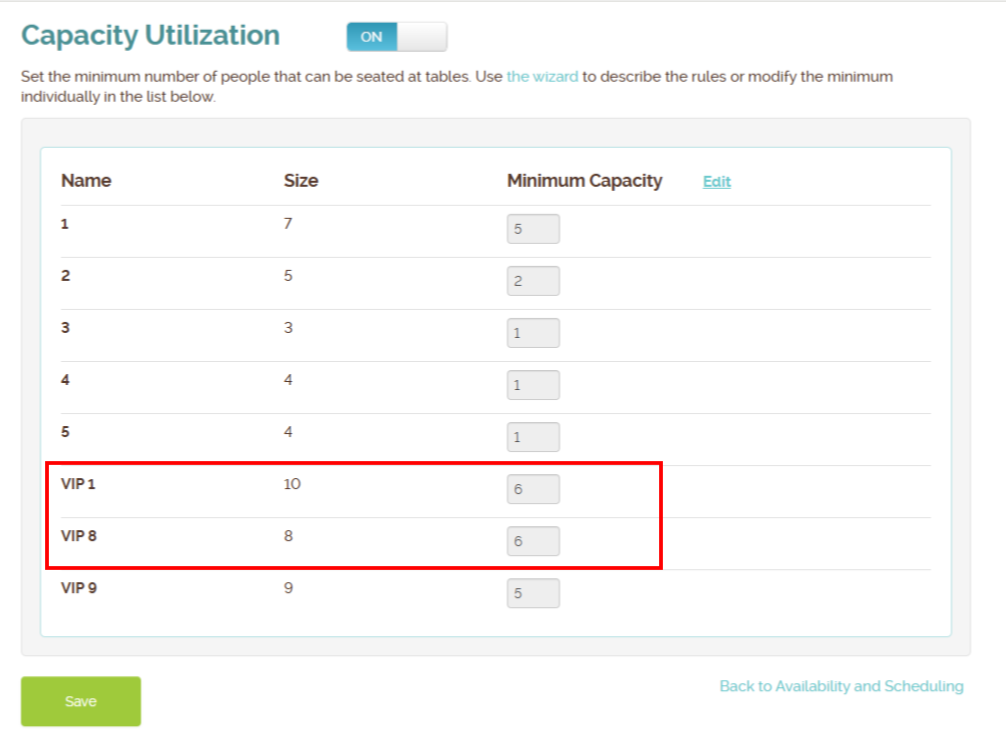
Table Setup of Bella Italia Restaurant
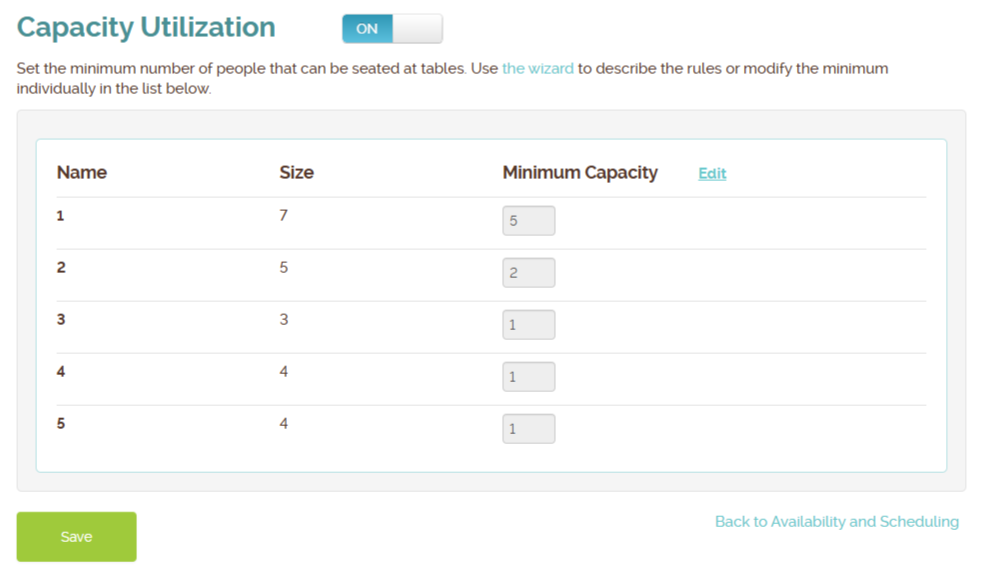
Scenario 1: First Reservation
Customer: John books a table for 5 people at 7:00 PM.
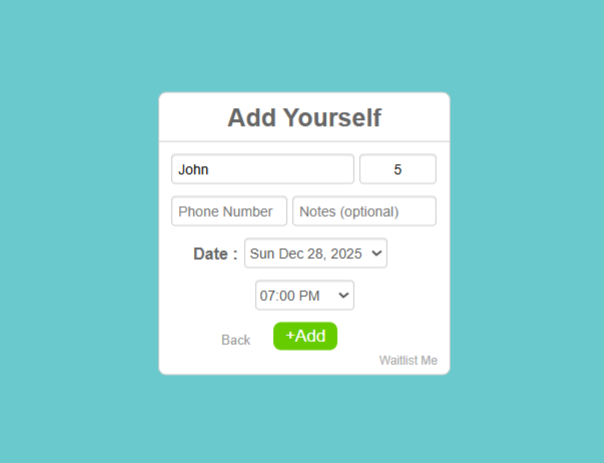
Tables that meet rules: Table 1 and Table 2 (Both are free at 7:00 PM). System auto-assigns Table 1 (best fit).
Scenario 2: Second Reservation (Same Time)
Customer: Sarah books a table for 5 people at 7:00 PM.
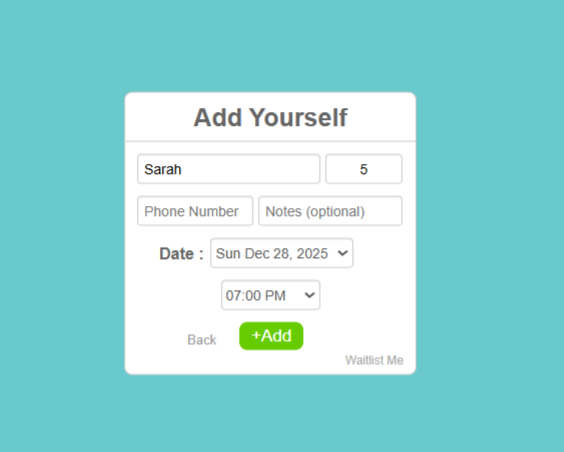
Table 1 is already booked. System re-evaluates eligibility and finds Table 2 is available. System auto-assigns Table 2.
Scenario 3: No Eligible Tables Left
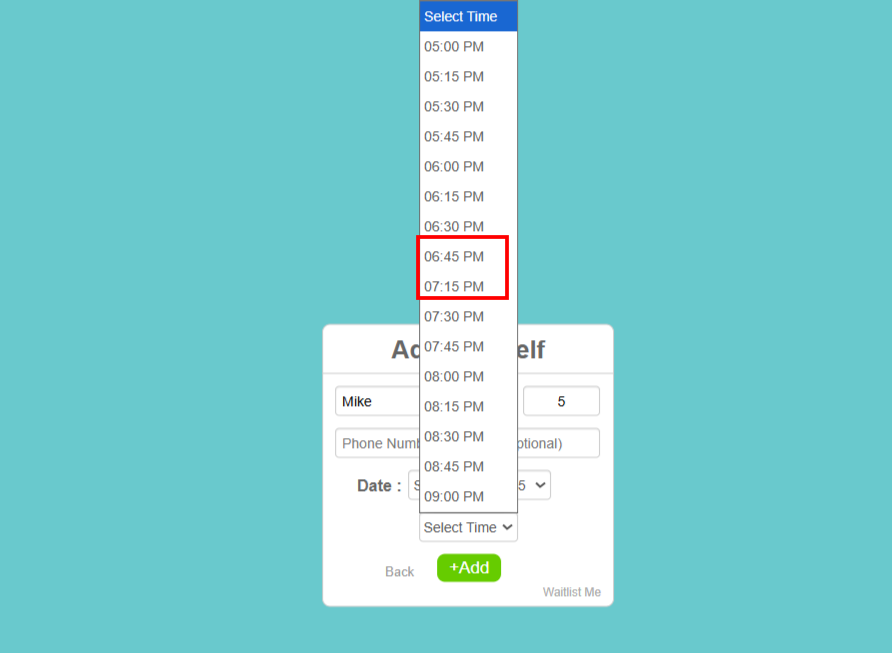
Customer: Mike tries to book a table for 5 people at 7:00 PM.
Table 1 and Table 2 are both booked. The 7:00 PM time slot is not visible on the widget because no other table meets the requirement.
Additional Use Cases for Capacity Utilization
- Protecting Large Tables: Ensures 8-seaters aren't taken by parties of 2, saving them for families or groups.
- Reducing Host Decision Fatigue: The system filters options automatically so staff don't have to play "table tetris."
- Predictable Table Turnover: Larger groups lead to more stable service pacing and kitchen load.
- Preventing Last Minute Capacity Loss: Stops small parties from consuming high-capacity tables early in the day.
When to Use Static Capacity Utilization
This approach is ideal when table layouts and guest traffic are predictable, and you want minimal daily management.
Example: A restaurant decides that 8-seat tables should only be used for parties of 6 or more. This rule applies every day to protect large group availability.
Summary: Why Capacity Utilization Matters
- Ensures efficient use of tables
- Protects large tables for larger parties
- Improves guest flow during peak hours
- Reduces manual reassignment by staff
- Maintains consistent service quality
Capacity Utilization gives businesses fine‑grained control over how tables are used, helping them serve more guests effectively while maintaining operational balance.